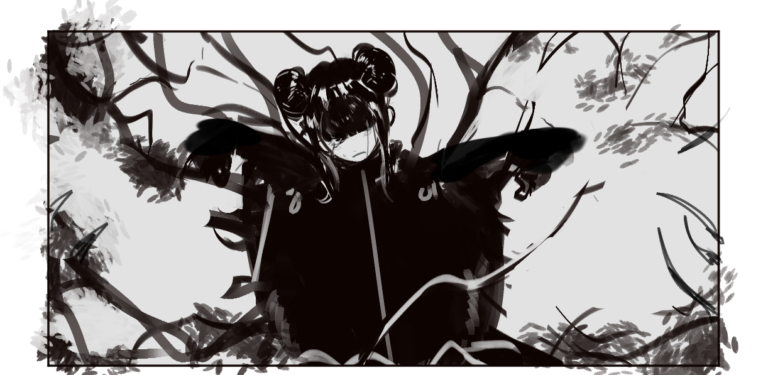
Fluorescents tremor the way frightened animals breathe, fast, shallow, refusing to commit to light. The clinic is a borrowed classroom with a sink that believes in rust and a counter that remembers chalk. Someone has dragged in a rolling cart of gauze and iodine. Someone else lined up paper cups like tiny bells waiting for mouths. The room hums with vending-machine nerves.
Two kids on cots, one custodian in a folding chair. Sugar still glazes the children’s wrists in hairline webs, like frost that thinks it’s allowed indoors. The custodian’s palms are laced with shallow cuts that shine under ointment; stray glitter clings to her knuckles from scraping at a lacquer she couldn’t see. She stares at her hands as if they’ve borrowed a stranger’s history.
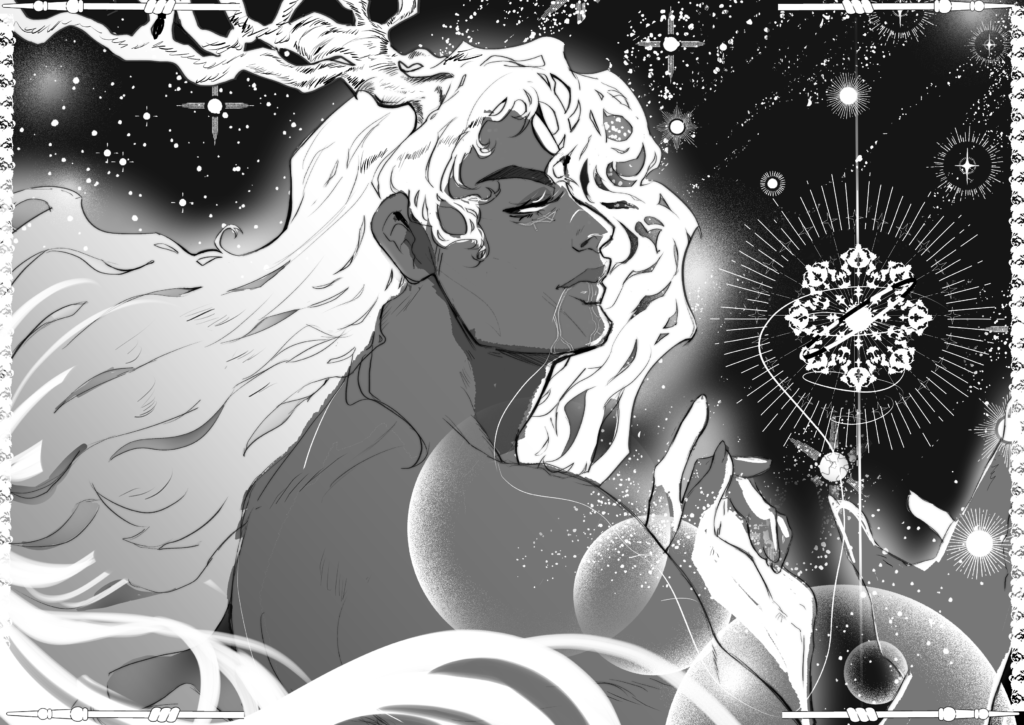
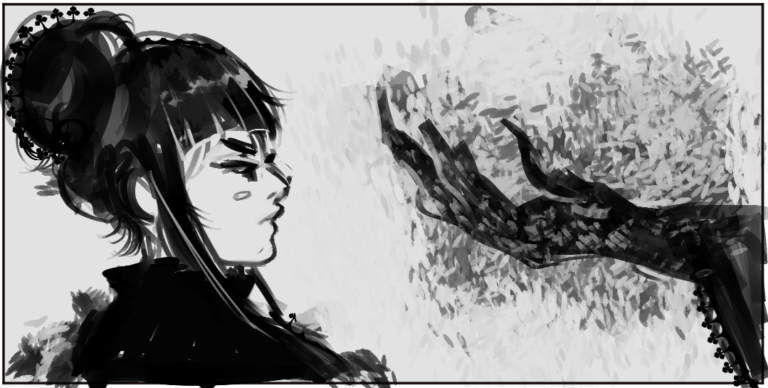
Hiroyuki stands between the cots with his glove already off, fingers pale as vows. The stars in his skin have learned discretion; no grand swarm, no opera. They lift splinters without drama, migrate along tendons like well-trained minnows, taste glass and leave absence. A black freckle drifts from the boy’s cheekbone and dissolves before it can remember it was pain. The girl’s forearm loosens; what had gone hard as candy sighs back into skin. Constellations flicker, tuck themselves away, and emerge again where the work persists. The room brightens a fraction. Fluorescents are steady enough to finish a sentence.
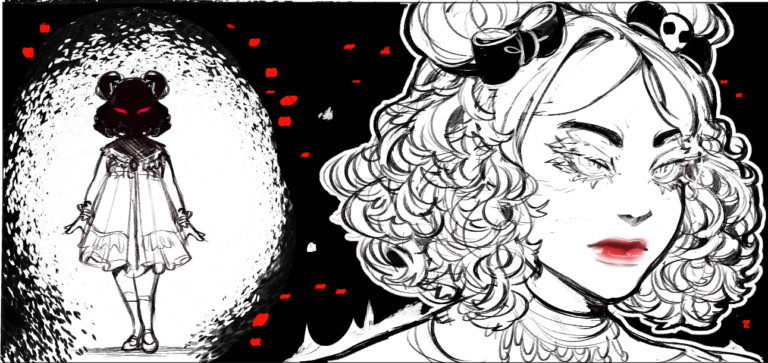
I hold a basin and rinse a cloth and become the rhythm people cling to when the world has decided to be uncountable. Cool water, slow circles, soft pressure at the hairline. The girl blinks up at me, irises grass-dark, and my chest tightens with relief so physical it could bruise. “It’s going to sting,” I warn, and when it does she grimaces like a soldier and breathes the way pamphlets teach.
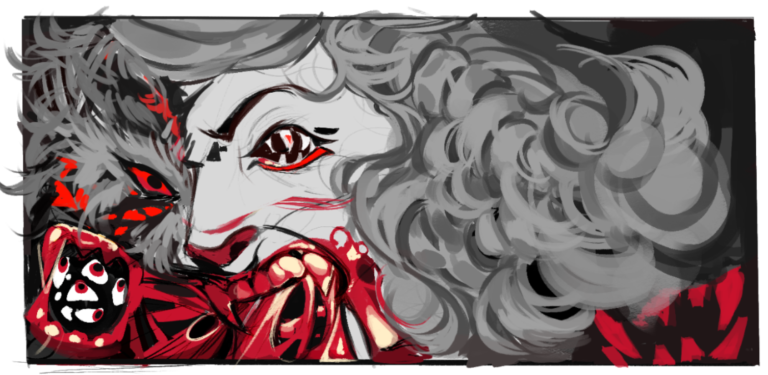
Isleen takes the chair near the door and teaches the door its manners by looking at it. Doors have moods; this one favours slam. Tonight, it learns restraint. The red in her gaze stays banked, a hearth that refuses to announce fire yet keeps you from freezing. Her hair pools on the floor in a quiet silver river; the eyes within close in ripples whenever someone passes the threshold muttering fear too loudly. She hasn’t spoken in ten minutes. Even her silence works.
The custodian clears her throat and offers me a rag folded into a neat rectangle. She needs her hands busy. “Kyouko,” she says, unprompted, like a person pressing a name into clay before it hardens. “I—” The sentence breaks open under its own weight. She nods toward the hall where shoes squeak and radios rasp. “They keep asking what it was.”
“Tell them you saw smoke,” Hiroyuki says, gentle in the exact register required to be obeyed by tired people. His stars lift a last sugar thread from the boy’s wrist and set it into nothing. “Tell them you helped children breathe. The rest can wait until morning.”
Kyouko touches the edge of her chair as if chairs can bless. “Smoke,” she repeats, and tries the word on like a coat. It fits only at the shoulders.
The corridor clots. Parents, neighbours, late-shift uncles who brought convenience-store flowers because hands demanded errands. Bodies press at the threshold, reluctant to cross it, reluctant to leave. Fear smells like warm plastic and winter sweat. The press of phones rises. Screens tilt in, tilt out, each one catching some slice of impossibility and failing to agree with any other slice. Where Isleen sits, a smear of glare curls on every recording: a child-height vertical brightness that eats pixels. The image jitters and shrugs, then settles on a shape the software prefers; later, they’ll swear the chair was empty. The door will remember otherwise.
Wren materialises from the hallway like steam condensing into a grandmother. She already carries three receipts: a rumour about the cafeteria’s sugar-stiff dead (“candied,” someone said, and the word stuck like caramel), a neighbour’s certainty that a fox ran laps around the roof, and a paramedic’s quiet note about a firefighter who couldn’t bear to enter the gym. She pockets them in her skirt as if filing recipes. “Cameras are hungry,” she murmurs, not to me exactly, not to anyone who would mind. “Feed them wisely.”
A boy on the cot lifts his head. Big eyes, chapped lips, the grim set children wear when they’ve been told to be brave for adults. “You were gone,” he whispers, a confessional consonant thickening his tongue. “Ten minutes.”
My hand stops mid-stroke on the girl’s brow. The cloth cools on my fingers. Ten minutes lands behind my chest with familiar, merciless accuracy, the shape of what I paid humming against bone. I manage a smile that shows my teeth to keep it from showing my fear. “Did it feel long?” I ask, light as linen.
“Forever,” he says, and then his ears pink as if he has confessed to exaggeration. “But I counted.” His gaze flickers to Hiroyuki’s moving stars and back. “You came back.”
“Of course she did,” Wren coos, swatting the air as if shooing flies. “She’s terrible at leaving.” Her eyes meet mine for one bright blade of a second, and what lives there is pride sharpened on appetite. She tucks that receipt, too, into a pocket.
The threshold bursts into a garden of voices. Parents surge with words like thorns: Where were you, who let this, what happened, my son, my daughter, my cousin works for the prefecture—the vines tangle around the same trellis. A woman in a burgundy coat holds her phone out as if it were a warrant. “Miss, what did you see?” The screen’s red dot blinks like a heart squinting.
I can step into that noise and bleed into it for hours, or I can stay with the children whose skin is still remembering how to be skin. One choice draws attention and takes from me what the night hasn’t; the other gives them breath. The math isn’t complicated.
“I’ll be with them,” I tell Hiroyuki, low. He answers with an almost-smile that feels like a handrail installed exactly where I planned to put mine. He turns to meet the corridor’s hunger with a diplomat’s spine.
“Please,” he says to the crowd, neither bowing nor blocking. The constellations vanish under leather; his hand becomes a gentleman’s hand again. “Let the children rest.” The sentence extends a path that adults can walk without losing face. Two step back, then five, then the burgundy coat decides she has another angle. The corridor’s volume drops a note. The door stays calm under Isleen’s gaze.
“Shizuka.” Isleen pours the verb into the room and the fluorescents hold steady. Quiet arrives and has the good manners to feel earned.
I replace the cloth with a fresh one and the girl sighs in her sleep as if surrendering to a kind weather. Kyouko hands me a packet of sterile wipes like a priest passing a reliquary. I clean around the boy’s nails where sugar has left sticky moons. He watches with that terrified patience particular to children who think pain is a test they could fail.
“It itches,” he announces, relieved to discover a complaint the world sanctions.
“It means your skin is remembering itself,” I say.
He worries this over. “Do you remember yourself?”
The question hits soft and finds the seam. Ten minutes, a missing pane of today. My tongue phrases a lie so politely it could attend church. “Enough to finish this.” I smooth his blanket and add, “Enough for now.” The honesty lands like a coin in a quiet jar. He nods, satisfied by the sound.
Outside, the witness-bloom grows fragrant. A handful of neighbours cross their arms in synchronised disapproval. The press rearranges itself into a better angle. A man who has already spoken too many sentences about bravery speaks another one. Wren breathes in the noise and comes away shining, as if gossip were a lacquer she knows how to apply. She drops a rumour into my palm like candy. “They’ve named it,” she says, delighted. “The Sugar Night. Miserable taste, excellent mouthfeel.”
“Don’t,” I say, with no conviction. She eats the word and smiles with her eyes; the smile is trouble, but it is ours.
Hiroyuki stands in the door’s mouth and diffracts questions. “Smoke,” he repeats, every time. “Children. Rest. Morning.” He doesn’t argue; he offers a lexicon people can hold and later repeat at work. No one notices how his absence of detail organises them more effectively than a speech. He does not look back at me when the boy’s whisper—you were gone ten minutes—replays itself in my skull. He has already noticed. He will wait until waiting costs less.
Kyouko pinches the bridge of her nose; tears balance there like rain clinging to eaves. She doesn’t let them fall. “My sister,” she says to no one, to air, to me. “I called her, and I couldn’t remember why. She kept asking. I hung up.” Shame prickles her cheeks. “This will sound… stupid. I went to the gym door. I touched it. It felt like… jelly. Like a dessert.” A wet laugh that isn’t funny. “My grandmother used to make coffee jelly. We hated it. We ate it anyway.”
“You saved them,” I say, because sometimes truth needs to be told before it believes itself. “You came back with help. You kept your feet moving. That’s the whole miracle.”
She studies me as if testing the statement for rot and finding none. A nod. Her shoulders lower the smallest acceptable degree.
The girl on the cot wakes enough to want a joke. “Miss,” she whispers, rolling the word in her mouth like a bead, “am I… candied?” The smile trembles, unbrave in a brave way.
“Not anymore,” I say. “Now you’re very slightly pickled. That’s why you’ll be delicious at breakfast.”
She giggles and then frowns. “I hate pickles.”
“Then be tea,” I amend, deadpan. “Oolong. Steeped exactly right.”
That earns a serious nod. Children respect rituals that taste like tasks. She closes her eyes and arranges her breathing into cups.
Down the hall, the ambulance sirens settle into idle. A camerawoman asks permission with her eyebrows; Hiroyuki declines with a tilt that leaves her dignity intact. Isleen’s gaze brushes the corridor and resets several spines. A father holds his son with one hand on the boy’s head, palm big and clumsy, and rocks without knowing he rocks. Wren leans against the water cooler and whispers to the blue jug until bubbles rise—the sound of agreement.
The boy on the cot has been watching me think. “You were gone,” he says again, gentler now that he owns the sentence. “But you brought your minutes back.”
His faith slices cleaner than pity. “I tried,” I answer. “Some stick better than others.” He accepts this with grand adult gravity and yawns, jaw creaking like an old hinge oil remembers. The yawn tugs the girl’s yawn out by its tail. I tuck blankets at their waists and want to fold the whole world in the same square.
The door shifts, timid then sure. A nurse in blue scrubs glides in with the authority of someone who has been told five contradictory things and decided to do the right sixth. She checks pupils with a penlight. The beam finds no red. Her clipboard acquires facts as if they were brave birds returning to a hand. “We’ll move the children to imaging in ten minutes,” she says, and I flinch under the number. It isn’t her fault; numbers don’t know what they cost.
“I’ll go with them,” I say.
Hiroyuki glances over. Approval lives in the angle, in the noninterference. He turns back to the corridor and lowers the temperature of a rumour with one sentence about emergency exits and the kindness of strangers. Cameras subside. The door enjoys being well-behaved.
I wring the cloth and the sink mutters iron. Water runs clear. My hands smell like iodine and sugar skin.
The fluorescents quit trembling. The room accedes to the fiction of safety enough for everyone in it to believe they will keep breathing until morning.
Parents take turns peering in with eyes they hope are invisible. Wren presses a faintly sticky kiss to the air above both children’s foreheads and drops a folded receipt—an actual corner-torn slip—into my palm. On it, in pencil, a single word: Later. She winks. I pocket the scrap without argument. I already owe it.
Isleen rises, and the door behaves as if bowed to. Hair whispering, gaze unsoftened, she says nothing, and somehow nothing is the kind of praise I needed. Approval from her tastes like the quiet between thunder and rain. You only notice it if you lived outside.
I sit on the rolling stool between the cots and let my shoulders drop a notch. The kids’ breaths sync by accident. Kyouko’s hands finally stop looking like strangers’ and remember chores. Hiroyuki’s constellations sleep under leather, listening for the next task. Wren hums to her pocket as if stories were mice that like to be sung to.
Phones still film the corridor, trying to catch an angle the world will consent to keep. The loud room lowers its voice. Somewhere under the floor, a drain I scheduled for tomorrow holds its laugh like a seed under tongue. I feel it, faintly, the way a woman in a field feels thunder two towns over.
“Ten minutes,” I whisper under my breath, a receipt only I can redeem.
The children sleep. The city talks. Night eats. Morning waits, licking its teeth.
· · ─ ·✶· ─ · ·
Outside, the night has learned to talk.
The clinic door spits us onto a sidewalk crowded with testimonies, each voice trying to make an instrument of the air. Reporters stand in tidy triangles, nodding at their own sentences. Neighbours braid facts they didn’t see with memories they wish they had. Phones lift like lilies. Words scatter and return, seeds riding a wind that can’t keep its story straight.
A woman in a grey cardigan counts with both hands—forefingers tapping each other as beads—names under her breath. “Haruka, Masao, Nene, Sora,” she lists, then starts over as if the names might produce the people by repetition. “Haruka, Masao…” She looks up when anyone passes and searches their faces for the syllables she’s lost. Her mouth keeps moving after she stops speaking, a prayer without sound. When she notices me, she nods. “My sister’s boy,” she says. “He should be here in his shoes.” The shoes become a sentence that can’t find a verb.
A priest kneels by the curb and draws a thin line of salt along the concrete seam where gutter meets road. He shakes from the elbows with effort; keeping the pour even matters more to him than what the line means. He stops to wet his lips, murmurs a word, and lifts the container again. Kids watch from a respectful distance, a mix of seriousness and the itch to kick through the white like surf. The priest makes a small square around a storm drain, pats the salt and stands, pleased by the geometry.
A biker leans against a streetlight, helmet under his arm, a stripe of soot across his cheek like lazy war paint. “Crosswalks moved,” he insists to anyone willing to inherit his certainty. “Hunted me. I swear. I was on Shirakawa and the stripes, they—” He chops his hand through the air, remapping a road. “They aimed. I had to hop the median to shake them.” He laughs the way people laugh when they’ve almost admitted they were scared. “I don’t even like crosswalks, and now they don’t like me back.”
Somewhere, a cameraman tells a microphone to be braver. Somewhere, a neighbour points at the moon and announces it looks different when the dead are near. A little boy drags a plastic sword along the rail and declares he killed a giant bug. His mother lets him have the sentence. We all need to live with a story that obeys us.
Hiroyuki—still without his glove—moves through this field the way a dandelion clock moves through a child’s breath: beckoned, never hurried. The constellations in his skin go quiet and small until they’re only a soot of stars along tendon, a domestic night. They rise when a stretcher needs privacy and sink when a reporter gets too bright. No wall, no flare, a scrim that suggests the virtue of looking elsewhere. Paramedics slip by grateful and unstartled, as if they had all remembered at once how doors work.
He speaks less than he listens, but the listening rings. Names adhere to him, the way burs find their way to sleeves. Addresses, too. “Please rest,” he tells a father who smiles too hard, and then: “Your mother is in Chūō Ward? You should go.” He hands off instructions as if passing cups of water down a human chain. People take them without the pinch that accompanies orders. They swallow, they nod, they leave space where space is needed. He’s harvesting witnesses without stripping them. Detachment dressed in grace, the coat he always wears when the work has to be done and no one can afford to hate him for doing it.
“I saw her,” a teenager tells me as I step past, eyes wet with YouTube brightness. “The little weird one, with the hair? I got her on video. But she’s… like, the pixels—” She flutters her hands, trying to show me a corruption that won’t be pinned by gesture. “She’s there, and then she’s glare. I think my phone is haunted.” She laughs, then hiccups a sob, then presses her lips hard. “Sorry. Do you need—uh—do you need help? I’m good at carrying things. I can carry a lot.”
“Thank you,” I say, and let the thanks be the work. She stands straighter, saved by usefulness. She holds the clinic door for a stretcher as if it were a great honour to hold a door. Tonight, it is.
A policeman rolls slow along the curb, window down, elbow out, the posture of men who believe cruisers are boats. He’s asking for statements that no one can give with words that will pass a lawful audit. People hand him pieces anyway: smoke, siren, brave, children. He writes smoke in a notebook, then underlines it twice to make it into an anchor. Anchors keep boats civilised. I wish him the weight he’ll need.
Isleen stands at the mouth of the alley not far from the gate, not barring it, not inviting it, just giving the night a place to hold still. Her hair slicks the light into a ribbon; the eyes in it blink the way sea anemones pulse, slow, synchronised, indifferent to being witnessed. She is watching the street the way a storm watches roofs. People look toward her and then look away, eyes watering as if a wind has picked up. In each phone’s screen, she appears as a vertical error that the algorithm mends by cropping. Later, there will be footage of a gate with no one in it, and people will swear they remember a little woman, and both will be true.
“I hate everyone in this room,” I said not long ago, and the sentence follows me now like a collar I put on without looking. Guilt rubs against my throat. It smartens me instead of souring me; there’s relief in that. Hate is energy, and energy can be directed.
A girl sits on the curb with one shoe off, heel raw and shiny as a peeled grape. I kneel, thread laces through frayed eyelets, and double-knot as if the bow could perform a small protection. “Not too tight?” She shakes her head and immediately forgets she has ever owned feet.
A boy skulks near a vending machine and coughs sugar, spitting stringy sweetness into a tissue with great ceremony. I fetch water. “Sip, swish, spit.” He obeys like it’s a magic trick. The mouth clears; his eyes lose their glassy film. “You’re a hero,” I tell him, solemn, and he is, and his chest finds room for a bigger breath.
An aunt in a denim jacket grips my sleeve. Her fingers are paper cuts and dishwater. “My cousin says her sister’s baby is in this school,” she says, words tripping over each other. “But she can’t remember which sister. She keeps thinking of a crib, and then the crib is empty, and that makes sense to her, and that doesn’t make sense to me, and I hate that.”
“Hold her hand,” I say, because this is work too. “Tell her to describe the crib.” The aunt nods, grateful for a task that will not ask her to be wise.
Reporters splinter into tactics. One repeats the word candied on a loop in search of a slogan. One hunts for a crying face with the appetite of a lens that has never eaten enough salt. One woman with a careful bun interviews a firefighter who keeps his helmet on, chinstrap unfastened, knuckles swollen. “We followed protocol,” he says, and the words are a raft he is lashed to, a dry thing that keeps him from having to pronounce hunger and children in the same breath.
Wren slides among them, her smile the colour of good gossip. She agrees with everyone and means none of it. “So brave,” she tells the firefighter, and asks a gentle question about a blocked stairwell that drops his shoulders two centimetres. “So shocking,” she tells the bun, and sets a pebble in the woman’s shoe by casually mentioning the angle of a camera the woman didn’t see. To the candied reporter, she offers a different confection: “Sugar burns,” she purrs. “Say burned sweet. It tastes worse. They’ll believe you.” He writes it, obedient as a spouse.
She bumps my hip with her hip as she passes and presses something square and warm into my palm. A Polaroid, still veined with development.
When the image settles, it shows three bodies walking under an underpass that hasn’t existed here for years. We’re blurred, which is honest. I know the shape of that blur: a small woman moving as destiny, a tall man holding his constellations tight, and me, a hinge between them with my shoulders lifted like I’m carrying minutes on both. Behind us, the concrete mouth glows a sickly gold.
“After remembers for you,” Wren purrs, pleased as a cat allowed on the counter. “Keep it. You’ll argue with yourself tomorrow.”
“About what?” I ask, but she’s already leaning into a camera, letting the light adore her cheekbones until it forgets its questions.
A man in a delivery uniform, hat tilted back, points up and tells a cluster of strangers how the moon did a trick, how its dark side turned bright for a second like a coin flashing in a magician’s fist.
“I don’t drink,” he adds, because belief is purchased with disclaimers. An older woman with a noodle shop apron explains that the bell in her shrine counted five, then four, then five again, and she knows for a fact she did not touch the rope. “My mother,” she says, and then cannot find a sentence that will hold both mothers at once, the living and the dead. She shrugs, wipes her eyes, scolds the priest for putting salt on the wrong side of the crack. He apologises by putting more.
Two municipal workers in orange vests unspool caution tape, but the tape cannot remember what perimeter means. The workers straighten it with the patience of men who suspect the world is always this way and have decided to be brave about it. One asks me if I’ve seen a boy with a dragon on his hoodie. I say I’ve seen many dragons, which is true and useless. He thanks me as if I had done more.
Hiroyuki takes a name—Naomi—writes nothing, but I watch the consonants slot into a ledger the stars keep under his skin. He memorises the angle of her mouth when she says it, the way her husband doesn’t correct her when she gets her own address wrong, the wrist she rubs when she thinks she isn’t worried. He’ll never say we lost her brother tonight. He will carry the shape of that absence until morning can be made to lie politely about it.
Isleen turns her head a fraction. The red in her eyes heats once, a stove waking, and dims. It’s enough to tell me the street is deciding which stories to keep and which to defang.
The priest finishes his salt and begins again.
The biker convinces a new circle that asphalt can stalk.
The aunt with her beads of names runs out of fingers and starts on toes.
The city speaks. The city contradicts itself. Contradiction has always been its first language.
“I hate everyone in this room,” the old sentence returns, softened by the mouths it passes through. I take its teeth out. It becomes: I will keep you anyway. I take a toddler from a mother whose hands are shaking too hard to unscrew a bottle; I rinse a girl’s mouth again because sugar keeps believing it belongs. A teenager sits on the curb and destroys a cigarette between his fingers because the act of destruction steadies him. I offer him a napkin. He makes the ruin tidy and looks grateful for the excuse to do so.
A camerawoman lowers her rig and asks me if I saw anything I can say on television. “Smoke,” I tell her, and suddenly I believe it, too, because that is exactly what it felt like—something in my lungs trying not to be air. She nods, relieved to be handed a noun that will not get her fired.
The Polaroid warms my palm. I look again. In the photo, the three of us are smaller than we feel. The underpass light is a bruise, the kind that doesn’t show until morning. Above the blur, there’s a sliver of sky. It looks ordinary in the way that makes my heart panic. Ordinary is the bravest lie we tell.
Wren’s voice finds my ear without requiring her mouth. “Keep that,” she purrs. “When the day insists on being innocent, you’ll need a receipt.” She pinches my cheek, quick as a sparrow, and steals a wrap of caution tape while no one looks. She ties it in a bow around the reporter’s microphone and compliments his jawline. He blushes. His jawline improves.
A boy in a school blazer grips a bicycle by the handlebars and refuses to let go as if the bike were a dog that will run if unloved. “I was supposed to go straight home,” he tells me in a rush. “I didn’t. If I had, I would be—” He flinches at the edge of the sentence. Would be what? Saved? Dead? Unchanged? The meanings layer until the word buckles. “I’m not going to lie to my mother.” That he says out loud like a pledge before a river.
“You’ll tell her the truth that helps,” I answer. He nods, and that nod is the bravest thing I have seen since the children breathed.
The priest’s salt line breaks where a woman in heels steps too quickly. He doesn’t scold. He pours again. The line becomes a seam you can follow with your eyes if your feet are tired. I follow it with mine, back toward the clinic door, because a nurse has lifted her penlight and is looking for me to be the kind of adult who can coax a child through imaging. The street keeps testifying behind me, building the night into a shape it can carry into morning without screaming.
Hiroyuki gathers one last name and gives one last bow that is almost not a bow at all. Isleen’s hair looks briefly like a page being turned; the eyes in it blink in a wave, open to closed, closed to open. Wren peels a rumour off a lamppost and pockets it, humming a little march as if the story were a child she is teaching to walk.
At the clinic threshold, the girl whose shoe I tied catches my sleeve. “Miss,” she says, mouth yawning around a question she doesn’t want to own. “Will it come back?”
Tomorrow flashes in the puddle I did not mention. The kernel holds its smile. The honesty I can afford is thin as a receipt and just as necessary. “Not tonight,” I say, and that truth is big enough for her. She nods, accepts the gift, and lets her mother take her hand.
The door has learned its calm. It opens without complaint. Inside, the fluorescents breathe evenly. Behind my ribs, minutes I didn’t keep throb like a tooth touched with tongue. I tuck the Polaroid into my pocket where the heat of me will finish what the air started. After remembers. Morning will lie. Between them, I walk, carrying cups and names and the ache of a sentence I’m still rewriting into care.
· · ─ ·✶· ─ · ·
Hiroyuki finds me by the sink where I’m rinsing cloths no longer dirty and says, as if confirming the weather, “I’m going to coordinate supplies.”
He doesn’t ask permission. He doesn’t say sleep. He buttons his glove, and the stars lie down under leather like a school obeying a bell. Then, the only question he allows himself: “Where do you want me to stand tomorrow?”
A line I can draw on the map of what I don’t understand. I picture the breezeway’s parapet, the angle where my bad side can hide and still be seen. “There,” I tell him, and point toward the roof’s edge I won’t be able to see from here. “Left of the vent. Face east.”
He inclines his head as though the city has just given him orders it was waiting to hear. “Face east,” he repeats, a bead clicked onto a string. The door gives way for him without a sound. He’s down the hall, then down the stairs, then… elsewhere, and the fluorescents don’t flicker to mark his passing. Good doors know how to keep a secret.
I fold gauze into rectangles that would make Kyouko proud and lose a minute to the pleasure of edges aligning. When I look up, the clock over the medicine cabinet says 3:11. When I look again, it says 2:58. I don’t remember blinking.
Sirens thin, like a fever breaking. A nurse drifts in, adjusts a drip that isn’t connected to anything, and drifts out. The boy on the cot snores once, the kind of snore that admits he has not chosen sleep; sleep chose him. I sit on the rolling stool and let my head tip—just for a breath, a blink, a…
…
…flock of crows lifts in a single rip from the school’s eaves, a black sheet shaken out over the street. The sound is paper being counted fast—shk-shk-shk—then silence. I taste iron. The girl murmurs and turns her face to the wall, as if the wall can be kinder tonight than air.
The corridor murmurs without voices. Wren leans in the doorway as though it were a friend who never asks for anything. “Clerks must balance books,” she murmurs, grandmother-warm and butcher-calm. “After needs a receipt.”
She licks her thumb and smudges the air, a nothing gesture, a mother wiping soot from a child’s cheek. Something stops struggling far away. The fluorescent above the sink hums approval, then steadies. Wren blows on her thumb as if cooling sugar and smiles at me like I’ve passed a test I never took. “Drink water,” she advises, and vanishes to go compliment a camera.
3:07. The clock is obedient again. I pour from a jug that tastes like tap and iodine and rain that hasn’t happened yet. My throat accepts. My stomach keeps a ledger.
The street outside hiccups, and every news van along the curb goes dark in a polite row, like gentlemen removing hats. Camera LEDs blink once, twice, three times—in a pattern I know better than my own pulse—and then steady to no. Somewhere along the block, twelve phones drop calls at the same second and egret-necked reporters stare at their screens like lovers denied and say the same soft swear. The priest’s line of salt ripples and stays a line.
I close my eyes. I am in the stairwell. I am not in the stairwell. I am halfway between a step and a breath and the smell is iodine again, but not from the bottle; this is hospital-hallway, bleach undercut by weather, rain that thinks it’s clean. A man says please in a voice that knows the word won’t work and says it anyway because even knives prefer manners. My mouth floods with copper. I swallow and wake tasting pennies.
2:44. The clock is wrong with confidence. I stand to correct it and sit without having moved. Kyouko appears, places a folded blanket over the girl’s knees with a reverence that makes me want to kneel. “They’re closing the gym,” she says, though the gym closed itself an hour ago. “They asked me to find more towels.” She holds up her empty hands as if they’re towels she forgot how to fold. “Do you need anything?”
“Later,” I say, and the word snaps of its own accord, as if the receipt in my pocket wrote it for me. She nods, forgiving me a sharpness I didn’t notice, and goes to empty a trash bin with a bag that forgets to be a bag halfway to the bin. By the time it remembers, the can is full.
Out the window, the district flickers like a fish beneath a cloud. Lights drop—block to block to block—then surge back in a tide that doesn’t wet the ground. Somewhere, a train brakes early and no one calls it a failure. Crows settle. One remains on the rail, watching a puddle I refuse to acknowledge with the attention of a god considering a hymn.
“I should—” I tell the room. “I should…” The sentence has left me for someone who can use it. My hand is black under the nails. It’s not grease, not soot. Grit like ground constellation—tiny, unbright stars that won’t wash. I scrub at the sink until my knuckles ache and the grit clings, pleased with its new home.
The boy on the cot opens his eyes and looks at the ceiling. “Mr. Hiroyuki’s here,” he says, dreamy with conviction.
“No,” I say gently. “He went to—”
The overhead light hiccups. The room inhales. The shape of Hiroyuki’s hand appears on the wall where a shadow shouldn’t be: fingers long, palm sure, a night full of numbers nestled along the tendons. Then it is only a coat hook. The boy smiles, satisfied he is not alone in being right, and sleeps again.
News vans dark. News vans bright. A camerawoman checks her watch, taps it, nods, and later will write in her diary that her heart stopped for exactly the span of a breath and began again with different handwriting. The priest runs out of salt and pours rice. The biker uses his helmet as a bowl, and the helmet consents to be a bowl because bowls are what men hold when they have to accept something. Isleen stands in the alley, and the alley becomes a throat and then a hallway and then an alley again. Her hair barely stirs. The eyes in it blink like an abacus.
I blink. There is copper on my tongue and a line of warmth down the inside of my forearm where no blood runs. I wrap it with gauze I do not remember unrolling. Wren returns with lipstick fixed and stories untidy. She kisses two fingers and presses them to the windowpane; the glass fogs, clears, and shows me my own face for a moment as if the world has decided I exist again.
“What did you—” I begin.
She tilts her head, as though listening for bread to rise. “Clerks,” she repeats, elegant as a proverb. “Balance. Books.” She pops a syllable between teeth, savouring it like a seed. “Receipts.”
The clock says 1:19. Outside, a row of streetlights advance their lamps an hour in salute, then think better and retreat, embarrassed by their own eagerness. A policeman’s radio coughs and utters a number that belongs to a different night. A woman in a black coat begins a sentence with We have reports, and the microphone forgets to drink it.
I lay my head on my forearms on the cot edge and do not sleep, and…
…
…I am in a ledger. Columns, neat. Names rubbed so thin the paper shows through: Naomi, Haruka, a boy who had a dragon on his hoodie, a mother who forgot which sister had a baby, two paramedics with identical shoulders, one firefighter who didn’t cross the gym. A thumb—gloved, careful—turns the page. The paper whispers like a dress. The ledger hums with heat along its spine. A stamp falls: not red, a black so black it glints. The sound is thunder scaled for a desk. Ink smells like plum wine. The line after each name shivers and lies down.
“Stop,” I say to the dream, to the stamp, to the page that knows how to take weight. “Wait.” The ledger shuts itself gently, the way a person with manners closes a door on a crying child: softly, with the cruellest kindness.
I wake with my cheek wet. The light above the sink stutters twice, then steadies. My watch is honest for a breath, then starts counting backwards, shyly, as if it can pretend our bargain was different.
In the corridor, laughter rises. Wren’s voice stitches it into a shawl and puts it on a reporter: “Burned sweet,” she suggests, and he repeats it with gratitude, spared the responsibility of mouth-finding.
Isleen moves from the door to the foot of the boy’s bed with no between, and the sheet decides to be smooth simply because she is near. She studies my face for a time that doesn’t belong to either of us. “Sleep,” she says, which is neither order nor advice, and the room takes her side.
I close my eye to obey the floor, if not the word, and see the underpass from the Polaroid Wren gave me: the three of us reduced to blur, the concrete mouth lit sick gold, the black on the edges thick as frosting. In the far corner of the frame, a fourth shape, small as a punctuation mark, watches from the seam in the wall. I know it isn’t there. I know it is there. After remembers. I remember enough.
I stand because I cannot sit. My legs work like a machine that’s been oiled with the wrong oil. The clinic hallway stretches, compresses, and offers me the same two posters about hand-washing five times and then a different one about hydration. At the far end, a news van’s mast lowers, bows, rises, an apology to nothing. The cameras rest with their eyes open, waiting for a dream. At the nearer end, a janitor’s closet emits the clean smell of rain in a place where rain does not come. I open the door. Mops, rags, and a bucket that remembers flood. I close it and put my forehead to the cool paint and let it hold me up for a count I won’t admit.
An orderly pushes a cart. “Imaging will be ready,” she says, “at—” and the clock on her phone slides its numbers like beads, then decides on 3:03 like a child picking a favourite colour. “Soon,” she amends.
Outside, the power dips again. The district has been asked a question and has chosen to answer with its head lowered. The priest finishes the rice and draws a line with his shoe where the rice refused to go. A crow lands on his shoulder and he does not notice.
I return to the cots because that is what I can hold. The boy’s mouth is dry; I wet the little pink sponge and turn it between his lips, and the work is so small it makes the whole night survivable. The girl’s braid has come loose in the way that will drive her mother to apologise to strangers while fixing it—I’m so sorry, she never goes out like this—and I tuck the elastic back gently, as if the hair were telling me a secret I want to keep intact.
Footsteps. Not loud. Not stealth. The sound of a man who knows floor plans rather than floors. Hiroyuki returns on the minute he chose himself. The glove is on. The constellations have scrubbed their hands. His face is a slice of dawn filed down to polite. “Morning will come,” he says softly, and the sentence is both prognosis and apology.
“What did you—” I begin.
He looks at the child, at my hands, at the clock that isn’t sure. “Tell me where to stand,” he says, as if the question belonged here all along. “Left of the vent, facing east?”
“Facing east,” I repeat, and the words fit my mouth like a receipt placed in a drawer where someone will find it later and know who paid.
In the window, a line of LED tally-lights on the nearest camera blinks once, twice, three times. The priest’s salt holds its seam. The biker tells a new group about stripes that hunt. Wren hums a lullaby under her breath that is actually a multiplication table. Isleen looks at me and does not look away until the part of me that wants to ask for mercy learns a harder word: enough.
I sit. The stool rolls an inch and stops, obedient. My hands are clean except under the nails, where night has made its filings a home. Copper lingers on my tongue. The clock blinks 3:11. I don’t check it again.
We will go upstairs when the nurse decides the hour will allow it. We will make a room that remembers doors. We will sleep and tell morning what it can get away with saying. Somewhere under the day, a drain holds its breath and smiles, punctual. I put my head down on my arms and dream of a stamp that never runs out of ink and a ledger that forgives nothing and a man who will stand where I told him to, looking east, because I couldn’t afford to watch him make the night safe.
· · ─ ·✶· ─ · ·
Dawn arrives with its palms washed.
The sky unbuttons from black to the mildest grey, a shirt put on backwards and somehow acceptable. The police tape lifts and settles in the breeze like festival ribbon. Salarymen in pale shirts and tired shoes step over it with the grace of people who have a train to catch and an inbox already calling them by name. Briefcases skim the curb. Coffee steams. The world behaves as if behaviour were all it ever needed.
A mother in a yellow cardigan walks past the clinic door without pausing. Her gaze skates over our room and does not catch. Half an hour later she returns, the cardigan newly buttoned, a bakery bag warm in her hands. “For the nice workers,” she says with a smile that has survived many mornings. She places the bag on the counter and bows an ordinary bow. On her phone, the lockscreen is bright with a picnic photo that has one fewer face than it wore last night. The hole does not trouble the composition.
Kyouko—the custodian with the dishwater hands—stares at a ring on her finger like it keeps skipping to a chorus she can’t hum. She turns the band. Gold winks, then dulls. The skin beneath is pale where sunlight should have made a memory. Tears come without instructions; they choose a path along her cheeks and find their shirtsleeve. “I’m sorry,” she tells no one, then adds, honest and helpless, “for what?”
The corridor has rearranged itself into morning—nurses swapping night’s silence for daylight’s competence, a copier coughing, the smell of tea bags opened too quickly. On the bulletin board outside our door, children’s art still curls at the corners. Suns with yellow lashes, blue squares pretending to be houses, stick families with impossible hands. The paper edges are eaten into lace from soot and humidity, but every smile is resolute. A pushpin has fallen. Kyouko pins the falling back—an act of mercy, or superstition, or both.
Phones ping. The neighbourhood chat comes alive: Trash pickup is delayed one hour due to an incident near Komyoji. Watch out for crows at the river. Does anyone know a plumber? My bath sounds like a whale. There are no messages about missing children. A woman posts a photo of an excellent melon. Hearts collect like obedient birds beneath the post. Someone asks where to buy. The thread tucks itself in, satisfied.
A school office fax shivers itself awake and eats paper. The nurse on duty frowns at the machine as if it were a baby with an unfamiliar cry. The roll call slips out, still warm. Every absence is marked in a neat block hand: TRANSFERRED. The word repeats down the page like a spell for moving furniture. I touch the paper. The ink is very black. It smells faintly of plums and apology.
Hiroyuki stands at the threshold in yesterday’s beautiful ruin, and none of it has chosen to cling to him. His hair lies in its composed river, his collar is straight as a promise, his glove is back on like a ritual concluded. Nothing on him shines that did not mean to. He is immaculate the way a blade in a museum is immaculate—cared for, haunted. Tired at the bones, though. His shoulders wear an extra ounce of gravity, the kind no posture can refuse. Around him, the air carries a delicate ink scent I recognise from ledgers and from dreams. He holds a thermos. “Tea,” he says, and the word is an offering with both hands.
I take the cup and the heat steadies me; the steam rises and carries a suggestion of iron. He watches me not like a doctor this time and not like an Advisor, but like a man who has asked himself if this face will forgive him and has decided to wait rather than ask. In his stance, there’s a note I haven’t heard from him before, a formality with apology folded into the crease. He will not confess. The apology is not for what he did. It is for what I will have to live beside.
I step outside.
The street has swept itself. The salt line the priest drew last night has reinterpreted itself as frost. People step over it, and their breath comes out in the little white ghosts that only exist when you want them to. The priest himself stands by the curb and compliments the symmetry of his new geometry, puzzled by how clean his hands are. He shakes a stranger’s hand, and the stranger’s face relaxes into the smile of being remembered, though neither of them is certain what for.
“Good morning,” says the biker from the hours-ago story, astride a bike that is very proud to be a bike again. He pats the seat. “Roads are behaving,” he reports. “I knew they would.” He offers me a fist, then thinks better of it and offers a nod. Normal is a choreography; he hits his mark.
A girl with a red backpack crosses at the corner, early for a school that won’t call her name. The backpack is new. Its straps pinch her shoulders in a way they won’t in a week when it has learned her. I stop a neighbour carrying a bouquet rescued from a supermarket discount bin. “Have you seen a boy with a red backpack?” I ask, and brace.
The neighbour’s smile is gentle and blank as a well-scrubbed plate. She tilts her head, searching a shelf that has been dusted and reorganised overnight. “No,” she says at last, not sorry, simply empty. “We have a gardener with a green one,” she offers, helpful, as if colour is an answer. She peeks past me toward the clinic and holds out the flowers. “For the nice workers. You must be very tired.”
“I am,” I say, and take the bouquet because taking is a job too.
The bulletin board at the school gate has acquired a new notice: a cheerful flyer about Saturday’s neighbourhood clean-up. Clip-art brooms smile under clip-art clouds. Someone has tacked a sheet beneath: Thank you, first responders! Handmade hearts ring the words. The paper has that fuzzy edge that comes from tearing a stack of printer pages along a ruler. The custodian runs a finger along the hearts and cries without sound. She hides the tears the way people hide gifts they aren’t finished opening.
One of the paramedics from the night shift—eyes sandpapered, hair attempting loyalty—strides up with a box of single-serve juices. “We found these in a closet,” she says, and hands them out on reflex. “Grape. Apple. The orange is… theoretical.” She laughs, relieved by her own joke, and keeps moving.
Across the street, a news van yawns. The mast salutes the morning; the lights on the camera blink, then hold steady like pupils trained to a chart. A reporter raises his eyebrows, and the camerawoman lowers hers. He clears his throat, tests a sentence, discards it, and chooses a cleaner one.
“A small electrical fire,” he says into the lens, careful, practised. “Minor injuries.” The camerawoman nods; her mouth tightens in a shape that is grief with nowhere respectable to stand. She keeps filming.
Wren appears with a paper bag she absolutely did not pay for, greasy at the bottom, fragrant with something that calls itself curry bread and is absolutely possessed by sugar.
“Breakfast,” she announces to the nearest parent and then puts the bag in my hands with the gravity of a sacrament. “For being alive.” She leans, kisses the air near my temple, and whispers, delighted: “Hear how they don’t say it? They’ll be polite until it hurts.” She pinches my cheek, pinches the reporter’s script on her way past, winks at the priest’s line like it told her a dirty joke. A child stares at her with the unabashed awe reserved for street magicians and wolves.
Back inside, the fax machine coughs up a second sheet. This one is a letter about counselling resources signed by a principal who has not slept and whose signature has learned how to forge itself. We appreciate your patience during this time. The phrase proves itself by existing. The nurse sighs, a sound with equal parts mercy and salt. She stacks the paper on a pile that will be recycled when paper believes itself unnecessary.
Isleen stands by the window with her back to the morning, as if the day should earn the right to approach. Her hair falls in its tide; within the black-backed spill, hundreds of red eyes remain open for a last, long blink. She watches the street as a clock watches an hour—a relationship without sentiment.
“The city has been moved,” she says, the way other people remark on rain. “Not far. Far enough.” Her gaze doesn’t flick to Hiroyuki. The floor understands who she means. The windowpane cools under her certainty.
“Moved,” I repeat, and the word sits in my mouth like a small stone that refuses to melt. Out the glass, a bus glides by with an advertisement for a summer festival that ended last week. No one on the bus notices. A man on a bicycle stops at the light and texts with his thumb, frowning at his screen as if it’s stuttering. He shakes the phone once; it behaves. The city has accepted its edited paragraph and changed the subject.
Hiroyuki sets a second cup of tea by my hand—green, not black, the colour of grass in old paintings. “Sugar?” he asks, and the word hits me in the bruise where sweet used to live.
“No,” I say, and we both hear the ghost of last night in it. He does not apologise again with his posture. He allows the apology he is already carrying to continue its work.
Kyouko turns her ring again, slower now, practising acceptance like a kata. “My husband used to forget where he put his keys,” she says brightly to me, to herself, to the air. “He would blame the door. ‘Thief,’ he’d say, and pat the frame.” She laughs, and then the laugh folds; tears arrive with better aim. “I don’t know why I thought of that.” She wipes her face, embarrassed to be water. “Anyway. I made coffee. It’s very bad.”
We drink it and bless it. The bitter is a relief after the night’s canned sweetness. I find the boy’s red backpack in my head and lose it again. I find the girl’s braid and make my fingers remember. I ask another neighbour about the dragon on a hoodie. He tells me about baseball. We agree that the Dragons need a better bullpen. The talk is a rope; we both hold it and look away from the water.
On the sidewalk, the aunt with the beads of names approaches a woman with a stroller. “Do you know a boy named Masao?” she asks, careful, the way you ask a door to open when you aren’t sure it’s a door. The woman smiles, kind, and shakes her head. The stroller’s canopy hides a sleeping face that isn’t there. The aunt nods like this is the answer she expected, and so it cannot hurt her. She keeps counting. The numbers wear a groove and sit down in it, obedient as trained animals.
A teacher in a cardigan arrives with a stack of workbooks hugged to her chest like a child. “We were scheduled for practice tests today,” she tells me in the tone of someone applying lip balm to an earthquake. “I suppose that will… change.” She glances at the bulletin board and blinks at the TRANSFERRED column. The blink is too slow to be human. She adjusts her glasses, and the glass agrees to pretend nothing is wrong.
Outside the gate, a delivery truck idles. The driver carries three crates of milk to a school that won’t drink. He sets them by the door and places the invoice beneath the top crate where rain won’t find it. He knocks out of habit; the door chooses not to answer. He shrugs and leaves, a man faithful to his route. Faith is a kind of courage; it keeps the morning in its lane.
Wren steals a carton and sips through a straw like a child. “Mmm,” she says, “tastes like necessity.” She offers me the straw. I decline. She grins. “You’ll be hungry later,” she promises, as if appetite were weather she has ordered.
I step back to Hiroyuki, drawn by the orbit he makes without trying. “You didn’t sleep,” I say, not a question.
“I did what needed doing,” he answers, not a boast. Ink-scent threads the air like a note held until the ear agrees to hear it. He looks at the street the way a calligrapher looks at paper—aware of fibres, of how ink drinks and spreads, of how some mistakes cannot be scraped away without leaving a paler scar.
“Do you ever—” I begin, then lose the verb. Regret is too blunt. Remember is too kind.
He rescues me with gentility honed into function. “Tell me where to stand,” he says, as if the world is waiting for my finger to draw a small X on the map of his duty. The cup warms my hand. I point without looking. “There. East.” He nods. There is something like gratitude in it, and something like surrender.
Isleen’s hair lifts in a breath no one else takes. The embedded eyes blink shut in a single ripple, open to closed, travelling the length of her like a wave after a ship, barely there and world-making. Benediction or verdict—I cannot tell. The room relaxes as if someone put a hand on its head. The street keeps moving. The fax machine quiets. The bulletin board sighs in tiny crackles as the paper dries.
The mother in the yellow cardigan returns, again, a third time, this time with bottled water and an insistence that we take it. “You saved children,” she says earnestly, and the sentence fits in her mouth the way tea fits in a chipped cup: beloved because it’s what she has, not because it’s correct. I thank her. She beams. When she leaves, she hums a lullaby that stutters at the end of each line as if missing the rhyme.
On my phone, the lockscreen shows a message from no one: Trash pickup is back on schedule. A crow lands on the police tape and rides it; the tape decides to be a river, and the crow approves. Somewhere, a classroom projector blinks a blue rectangle across empty desks, unbothered by absence. The city yawns. The city ties its shoelaces. The city denies it ever screamed.
Hiroyuki hands Kyouko a tea she did not ask for and she thanks him with a bow that belongs to temples. He bows back, not as a man, not as a saint—just as someone who understands that morning requires choreography to keep from collapsing into its knees. “We will need brooms,” he says, and the sentence is so simple it could be a prayer.
“Brooms,” Kyouko repeats, liking the word for how it fills the mouth. “I can do brooms.” She leaves the room steadier than she entered.
A fax somewhere sighs once more and sleeps. The news van packs its cables with the reverent distraction of priests untying vestments. The priest with his rice line blesses the curb with a look and goes to work his day job, which is probably mercy in a different uniform. The aunt pockets her beads and walks home. She will not count today. She will count again tomorrow. Counting is how some people remember to breathe.
I put my hand in my pocket and touch the Polaroid Wren gave me last night: three blurs under an underpass that has no address. The photo is warm with my heat. In the corner, what might be a fourth shape watches us go. After remembers for you, Wren had said. Morning lies with such clean hands.
Isleen turns from the glass. “It will come back,” she says, because she refuses to trade truth for peace. “Not here.” She lets me have that much mercy. “Under.” Her gaze lowers, deepening the floor. “Always under.”
I nod. I am so tired I could sleep standing up, could sleep inside a sentence, could sleep in the space where a name used to be. “We’ll go,” I say, to no one and to both of them. “When the children are moved. When the tea is gone. When the city finishes pretending.” The decision clicks into place like a coin into a slot. Fate doesn’t answer; the vending machine hums, considering.
Hiroyuki’s cup empties. Kyouko returns with three brooms and a purpose. Wren eats the last pastry. The sun climbs. The horror of normal sets its napkin across its lap and tucks in.
Morning smiles with one fewer tooth. We smile back because that is what people do when invited to breakfast by a lie that keeps them standing.
· · ─ ·✶· ─ · ·
Hiroyuki leads us by the seam of his shadow to a neighbourhood sentō whose sign is flipped forever to CLOSED, the hiragana faded to a polite quiet. The glass in the vestibule is pebbled and frosted; behind it, a steam clock ticks only on the minute, as if refusing to acknowledge seconds on principle. He lays his palm to the lintel, listening.
“Doors mind their manners here,” he says—approval, not superstition—and the latch unlearns its rust for him.
Inside: the quiet of tile that remembers barefoot evenings. Wooden lockers with missing keys, baskets asleep on benches, a row of faucets arched like patient spines. The air holds an old kindness—soap long-rinsed, cedar warmed and cooled, laughter stored in the joints. Someone once hung eucalyptus here to steam a cough out of winter. You can still taste the ghost of it.
We triage the room the way field surgeons do with light and cloth. Hiroyuki sweeps a slow path with a straw broom; its whisper is the first sound that admits to being sound. He wheels a portable coil heater under the towel rack, and the towels accept the heat with a sigh too small for ears, a fog on the edge of sight. He rights a stool and places it exactly where the floor wants it. The bathhouse is relieved to be useful again.
I anchor minutes so they stop humming against my bones. A chipped ladle waits on a shelf. I hold it, and the memory of a grandmother slapping a wrist for wasting hot water rises, then seats itself; the minute calms and lives in the metal. A single geta sandal hides beneath the changing bench; I slide it out, feel the absent pair beside it like a phantom limb, and tie that small, lonely minute to the lacquered wood. Both anchors steady me. Afterwards, my hands tremble as if I’ve been playing the same note for too long.
Isleen stands at the threshold with her back to the street. She doesn’t cross or pace or perch. She watches. The door behaves under that red attention the way a child stands up straighter when a teacher steps into the room. The eyes in her hair blink—open, closed—and the latch holds, proud to be a latch.
Through the frosted pane, the city narrates the lie of the hour.
Commuters float past with convenience-store coffee clutched to chests like amulets. A mother pauses, frowns at the CLOSED sign the way you frown at a name on the tip of your tongue—and the frown forgets itself, smoothing into a morning face. Across the street, a butcher’s chalkboard removes today’s date and writes it again, then erases it as if embarrassed by eagerness. The chalk dust settles like early snow. The board chooses a third date and looks pleased.
Wren arrives as if the door were a curtain and the stage had been waiting for her entrance. Onigiri sit folded in wax paper in her arms, warm triangles that smell of rice and something pickled braver than common sense.
“Breakfast for my fugitives,” she announces, and sets them beside the towel warmer like offerings on a shrine. Rumour falls out of her pockets as naturally as change: press badges will “lose” their footage by noon; the priest on Shinmachi has decided, with relief he would deny, that the tragedy was an electrical fire; three blocks over, a grandmother stands at a counter, flour on her hands, unable to remember if her kitchen ever knew children.
She produces a Polaroid from her sleeve—a little white-framed square of insistence—and with a flourish pins it to the inside of the bathhouse door. In marker: THIS IS A HOUSE. She taps the corner to seat it.
“Receipts,” she says, delighted and grave in the same breath. “Names for rooms so the rooms don’t float away.” The photograph shows the door it’s pinned to, recursive as a spell, and a blur that might be us if you hold it at arm’s length and squint.
We eat. The rice is perfect in the way of rice that forgives everything. I can feel my body counting the grains, grateful to obey a simple math. Hiroyuki thanks Wren with words that ring like porcelain: durable, old-fashioned, clean. He sets a kettle where hot water used to sing and coaxes steam into the room. The sentō remembers how to smile.
He steps to the threshold and listens to the street the way an apiarist listens to a hive. “I’ll check the grid,” he says, neutral as a note in a margin. Knife under velvet. We do not ask for the definition of grid. He closes the door, and the door remembers it is a door. Lights breathe, the filament curve inhaling faintly, exhaling. Sirens far off take a single breath in and do not give it back.
I arrange towels in a pyramid that would make a god reconsider anger. I wipe the mirror, and it chooses to reflect only what we give it. On the women’s side, Mount Fuji smiles from paint that’s more lake than mountain, the snowcap bright where a hand refreshed it twice in the last decade. Beside the mural: a clock that would be vulgar if it were louder. It ticks its minutes like beads, respectful.
Isleen crosses the tile without crossing the tile; the floor edits itself under her, skipping the parts where distance makes demands. She stands, small and absolute, beneath Fuji’s painted blue and watches the door from here, the way a chess player watches the board from two moves in the future. Her hair pools; its red eyes count and count and do not tire of their arithmetic. She doesn’t speak. Her silence shapes the room the way a river shapes a bank.
Wren turns the taps once, lightly, as if greeting old friends. “They remember the temperature,” she judges, pleased, and steals a towel to wear as a shawl she doesn’t need. “I’ll bring bath salts if the shop remembers it sells them.” She winks, and the wink is both kindly and the opposite of that.
Hiroyuki returns with cuffs immaculate, voice as calm as a ledger balanced so tightly the paper doesn’t dare curl. Whatever the world will remember, he has already decided how.
He sets his thermos on the counter, and the thermos becomes part of the room’s inventory, no longer his but ours. “The district is quiet,” he reports, and the sentence is warm tea poured into cold hands.
“What did you—” I begin.
He meets my eye and offers nothing that would ask me to carry it. “The street will be kind until noon,” he says instead. “After that, we should be elsewhere.” He looks at the bathhouse, at Fuji, at the clock. “This place will behave for you.” A gift, a promise, a warning. He doesn’t tell. He never tells. I feel the apology in the angle of his shoulders and I do not refuse it.
In the quiet that opens, I find the minute hand I lifted from the under-day—the starlit sliver I pretended was just a sliver of light. It hums like a mosquito that refuses to bite me out of etiquette. It is metal and not metal, weightless and somehow heavy as a favour. I turn it in my fingers, and the little teeth along its hub look like a smile with too many conditions.
Without thought, I slide it into the knot of my belt. It warms against my skin, then cools to match me. I don’t show anyone. Some devotions require privacy to become true. If time will be a calendar and not a cudgel, I will keep a blade of an hour close to the body that must spend it.
We make beds out of benches and towels. The coil ticks to share.
Wren hums a market song about mackerel and jackpots; the tune catches on a nail and replays until the nail is satisfied. Hiroyuki writes a list of items that would make this room gentler—batteries, sugarless tea, a packet of antiseptic wipes—and the list folds itself into his pocket. Isleen, without moving, makes the door better at being a door.
Outside, the chalkboard across the street picks a new date and enjoys being right. A man with a briefcase stops, stares at nothing with the open, peaceful face of someone who has misplaced a brother and cannot remember the weight of what he’s missing. He rubs his chest to soothe a pain that never announces itself as grief. He blinks, nods as if answering his own thought, and walks on. The butcher wipes his hands; the cloth remembers fat. A bus exhales; the driver checks his mirror to confirm the bus is still a bus.
I test the faucet. The water comes warm, as if the building has hoarded a little heat on our behalf. I rinse the last iron from my mouth and spit until the taste gives up. From the locker room, a swallow of air, then stillness, then the clock ticks again—one full minute, polite as a bow.
Wren pins a second Polaroid beside the first while we are not looking. The marker insists again: THIS IS A HOUSE. The bathhouse reads the label and is pleased. The photograph catches Hiroyuki not-quite in frame, his shoulder a blur of pale fabric and dark thread; it catches Isleen as a shadow that Shadows refuse to sit on; it catches me twice somehow, as if I moved and the picture wanted both truths.
“There,” Wren declares, hands on her hips, admiring her vandalism. “Now even forgetting will have to knock.”
We are almost settled when the room proves that nothing is ever only one thing.
On Fuji’s painted face, the snowcap darkens, pales, darkens again; a gull painted into the corner blinks—once—eyelid neat as a brushstroke. The wall clock advances ten minutes with no sound, a courtesy leap. No one breathes for the length of those ten stolen minutes, and then we all remember how at once, like a room of people agreeing to applause.
Noon is already practising.
A delivery truck ghosts to the curb and idles. The driver stares through the windshield at nothing. His face wears peace like a gauze that does not heal, only separates. He rubs his thumb along an invisible ring and smiles at a laugh that never quite arrives, then the light changes, green waking up like a good dog, and he drives on.
The bathhouse door, with its pinned Polaroid and its manners, decides against riddles and remains a door. The latch is glad to latch. Behind it, we are a room that knows its name and three people who have borrowed an hour from a day that has no interest in lending. I lie back on towels that remember shoulders and steam, and the minute hand in my belt hums like a promise I haven’t learned the cost of yet. Fuji looks on with the calm of a mountain that has outlived better stories. The clock refuses to apologise for the jump it has already made.
We’ll sleep until the next verb comes. Then we’ll move.